Introduction
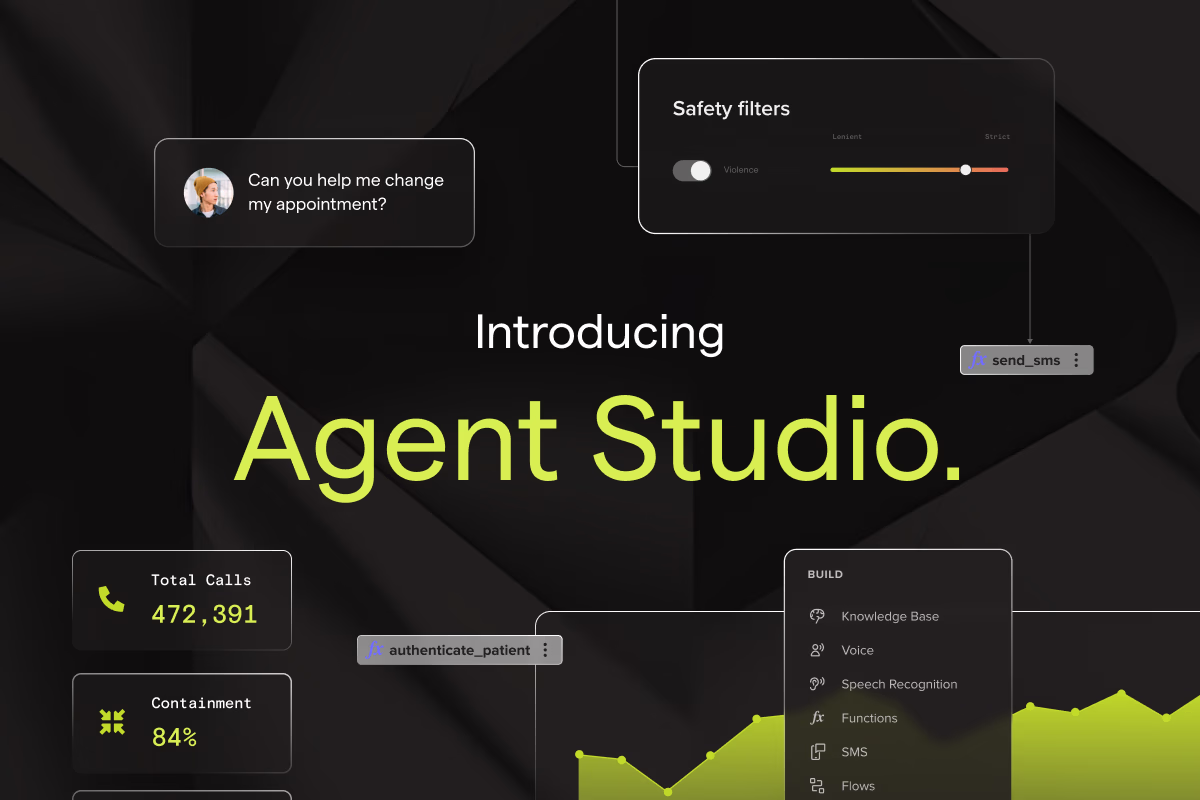
Poly AI reimagines the call center from first principles. Instead of layering AI onto outdated scripting systems, it provides a native, AI-first platform that empowers teams to design, test, and deploy natural-sounding voice agents in minutes. These agents can handle inbound and outbound calls—answering questions, booking appointments, and resolving administrative issues—without the need for hold music, rigid scripts, or extensive engineering support.
The platform is built for scalability, flexibility, and real-time performance, enabling enterprises to automate high-volume call operations while maintaining a human-like conversational experience.
Key Features
- AI Voice Agent design: A visual, no-code editor powered by React-Flow that allows users to define conversational flows, decision branches, and integrations without writing a single line of code.
- Resource & Workflow Management: Centralized tools for managing voice agent lifecycles, integrating external APIs, and orchestrating call workflows, making it easier for teams to maintain and evolve agents over time.
- Analytics & Reporting Dashboard: Real-time insights into call metrics such as call count, success rate, duration, and latency. Visualizations help teams optimize agent performance and identify operational bottlenecks.
- Developer SDKs: SDKs in both TypeScript and Python allow engineers to extend, customize, and embed voice agent capabilities into existing applications.
- Seamless Deployment: One-click deployment pipelines enable instant rollouts to production, with automated monitoring and rollback mechanisms for reliability.
Technical Insights
- Frontend: Built with React, Next.js, and TypeScript, ensuring a fast, responsive, and accessible user interface. Styling and component systems leverage TailwindCSS and ShadCN for rapid iteration and consistent design.
- Backend & APIs: A Node.js backend orchestrates services through an Express-based API layer. APIs are fully documented with Swagger, improving developer onboarding and integration.
- Developer SDK: Published the developer SDK supports Typescript and Python.
- Voice & AI Processing: Integrated LLM-driven conversational models provide contextual, natural dialogue. Real-time streaming and state management ensure continuity across multi-turn conversations.
- Database & Persistence: Core data is stored in PostgreSQL for relational reliability, with Prisma ORM simplifying schema management and migrations. Redis is used for caching, session storage, and real-time event propagation.
- Cloud Infrastructure: Deployed on AWS, leveraging EC2 for compute, S3 for storage, and RDS for managed databases. The architecture is containerized and designed to scale horizontally with increasing call traffic.
- CI/CD & DevOps: GitHub Actions power automated pipelines for linting, testing, container builds, and deployments. This ensures consistent quality, rapid feedback, and minimal downtime during releases.
Challenges and Solutions
- Real-Time Performance at Scale: Handling thousands of concurrent voice interactions required a system capable of ultra-low-latency streaming. We solved this by combining WebSockets with optimized load balancing and Redis-based pub/sub for event propagation, ensuring real-time responsiveness without bottlenecks.
- Natural Conversational Flow: Early prototypes struggled with robotic or inconsistent responses. By fine-tuning LLM integrations and implementing context-aware state management, we achieved more natural, human-like conversations that adapt to user intent across multi-turn interactions.
- Complex Call Flows and Customization: Supporting highly varied use cases (e.g., appointment booking, customer support) demanded flexible agent design tools. We built a visual editor powered by React-Flow, allowing teams to configure complex flows without code, while Prisma and PostgreSQL backed dynamic state storage.
- Security and Compliance: With sensitive customer interactions being handled, ensuring data security was critical. We integrated OAuth 2.0 with role-based access control, encrypted data at rest and in transit, and adopted AWS best practices to meet compliance requirements.
- Monitoring and Observability: As the platform scaled, debugging issues across distributed services became a challenge. We implemented structured logging, metrics collection, and alerting pipelines with Swagger-based API documentation and GitHub Actions CI/CD checks, giving teams end-to-end visibility into system health.